The infinite Animal
- Start date of the exhibition
- September 4, 2020
- End date of the exhibition
- September 25, 2020
Infinite Animals
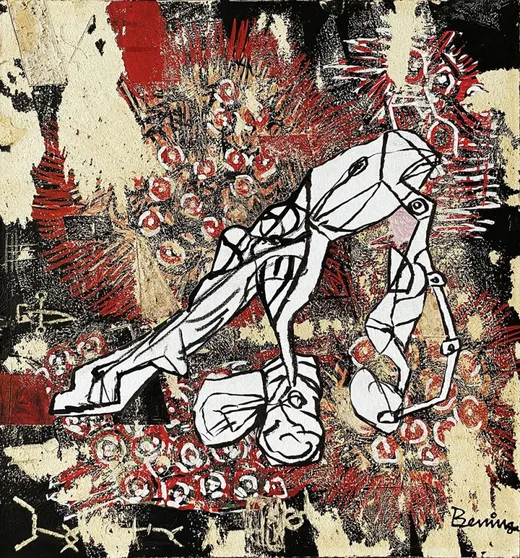
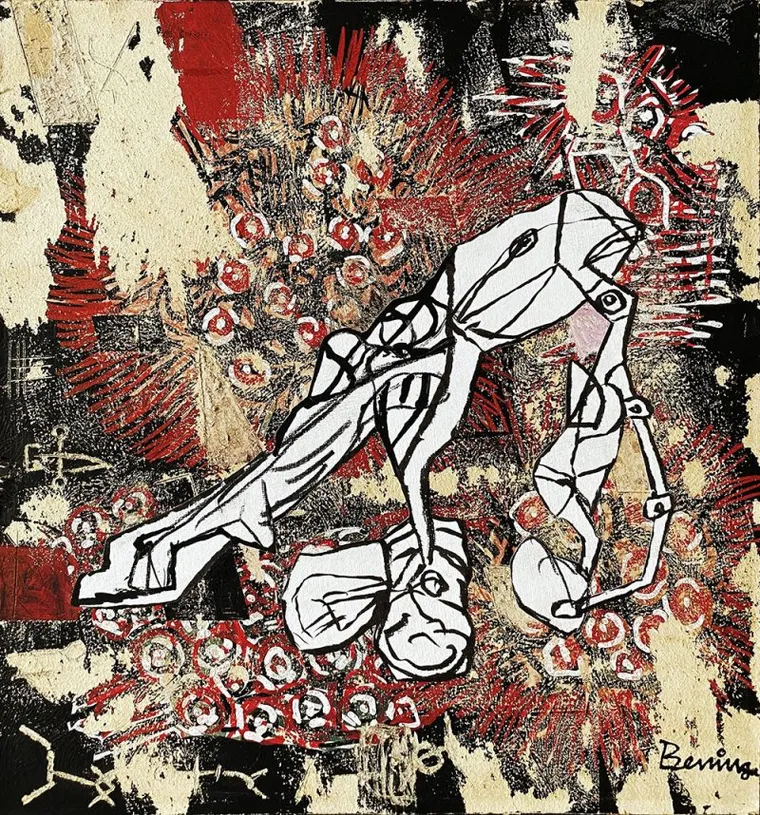
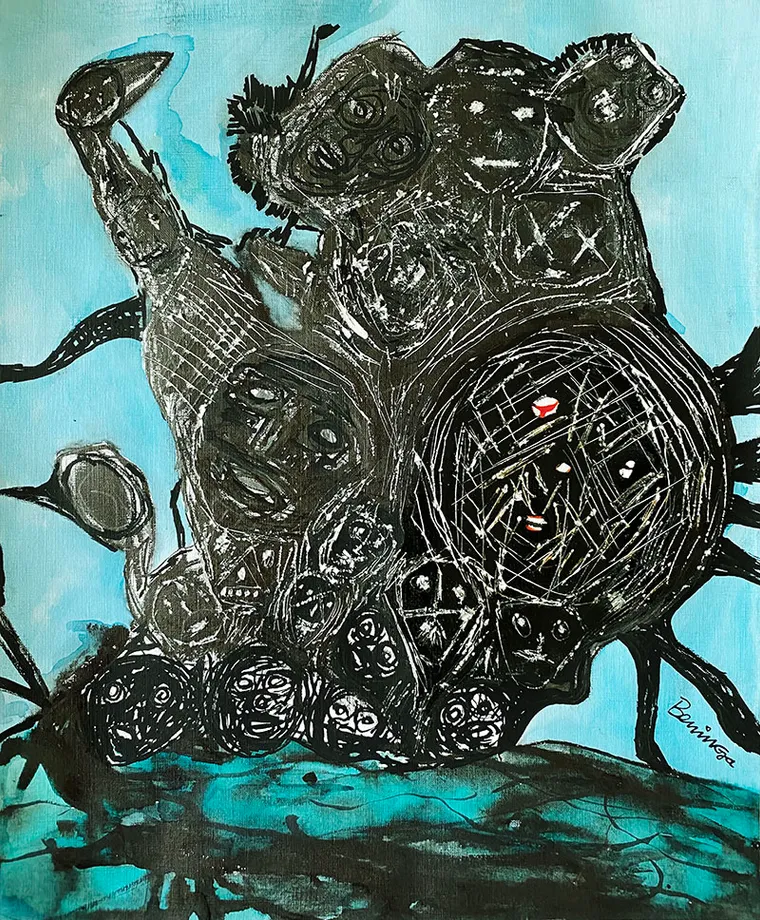
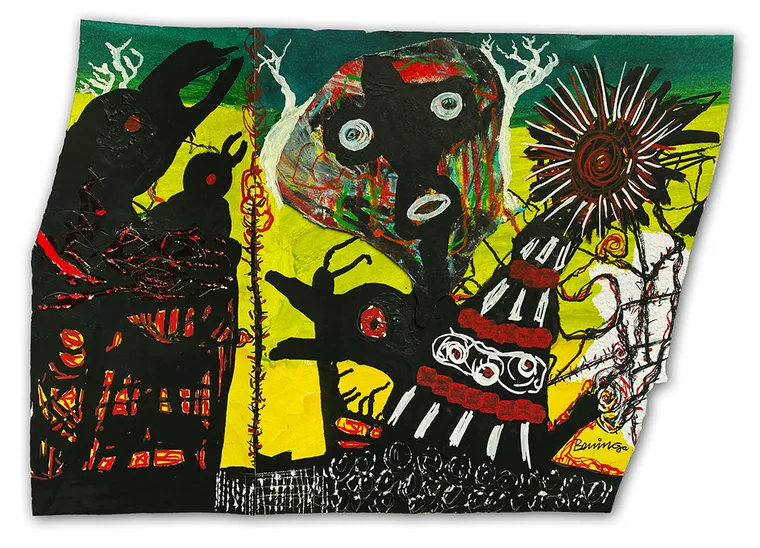
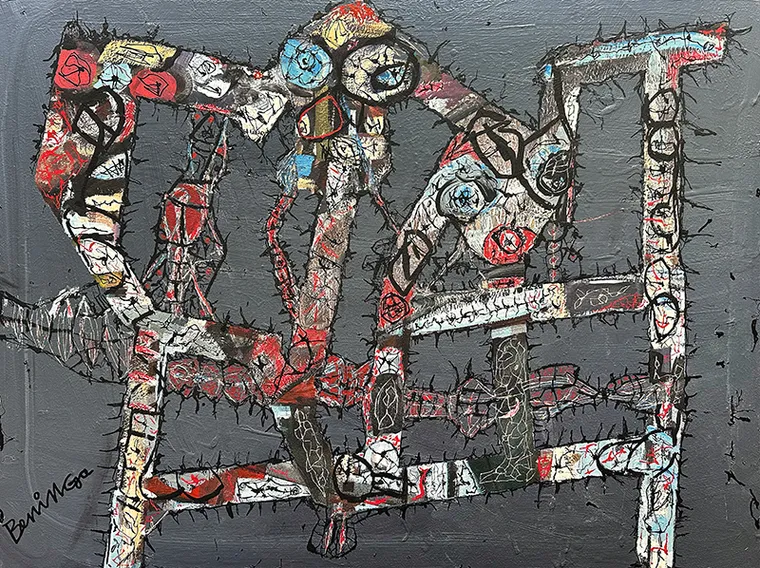
The works shown in the exhibition possess an enigmatic and, on the whole, rather dark aura. Their tension-filled, penetrating effect derives from an invitation to search for traces—a search that may lead all the way into the borderlands of the abyss and intoxication. The title of one of the exhibited paintings directly references Georges Bataille’s The Tears of Eros (1961), the philosopher’s final work published during his lifetime, which, taking cave painting as its point of departure, explores the birth of eroticism from art. For the artist, this is fascinating territory in many respects. Leo Beninga has always harbored a longing for subterranean worlds, whether located in a grotto or beneath the water. One ought to settle on the seabed, having already paid the underworld its due for such a privilege.
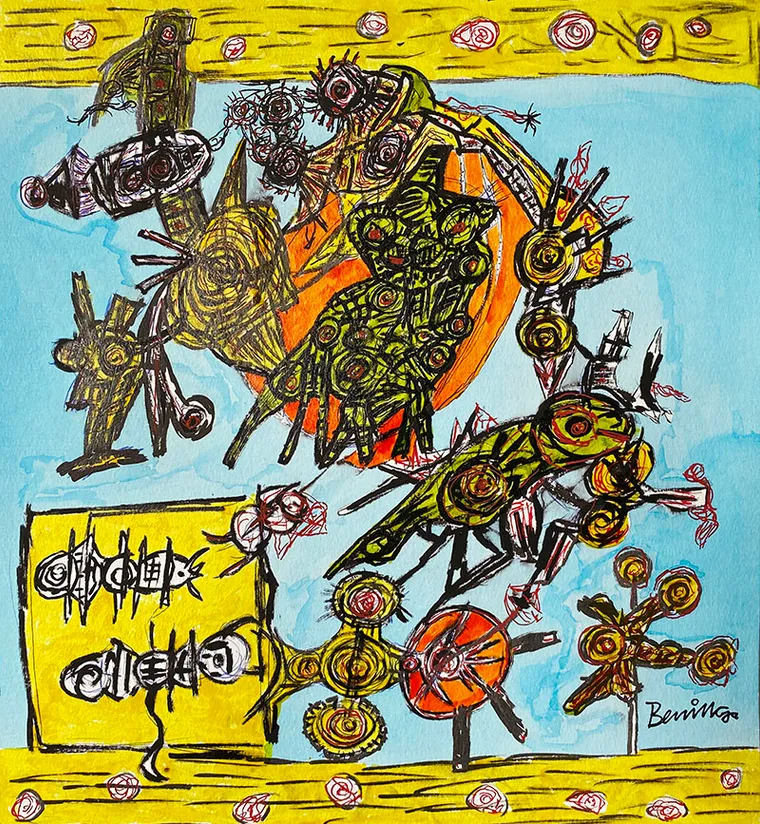
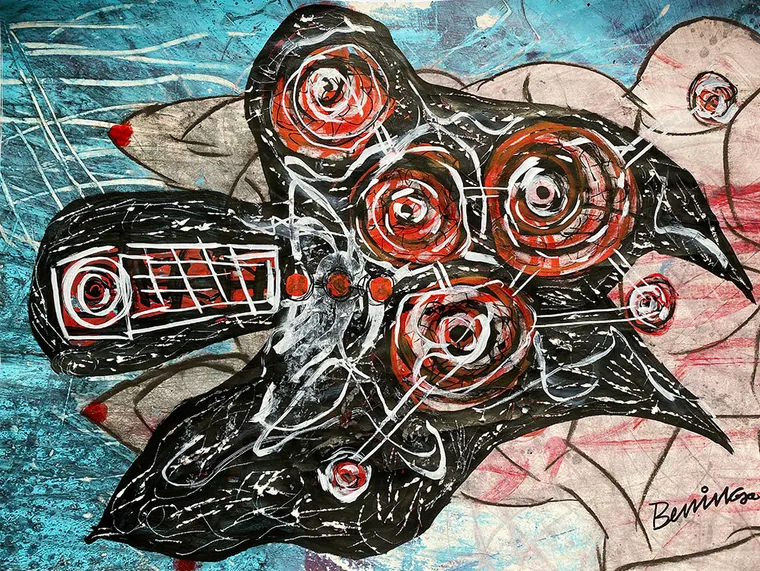
Beninga occasionally ventures into the archetypal. In his free-ranging return to the beginnings of painting, his motifs and colors sometimes recall the cave paintings of Lascaux, as though his infinite animals were powerful expressions of primordial principles. A spectacle of beautiful monsters, divine creatures and revered beasts; a play of hellhounds and gleaming reptiles; a happening of superior birds of prey and factory-new insects. And under favorable lighting, the shortcomings and injuries of these protagonists are of little consequence, for they are at the same time, and beyond any doubt, impressive and imposing apparitions. Stone-washed, attractively dented, pleasantly scratched and becomingly scarred, Beninga’s animals seem to rise above their hunters and tormentors, as though no golden net, no beautiful hole, no familiar trap could ever bring about their end. One might almost think, in light of these observations, that their tears, wounds and even their captivity were merely necessary intermediate stages in the narrative and essential building blocks of the same recurring ritual—a ritual that finds healing or revival, and thus its satisfying conclusion, in the act of painting. Beninga’s idiosyncratic poetic style is not confined to his manner of painting and the fantastic pictorial worlds he creates; it continues in his striking and often enigmatic choice of titles. Tension and lyrical nourishment. And the viewer searches for the empty princes before the barbed-wire shops, the southern animals on the dark pastures, the tarred angels in the scratched cities, the rose cavaliers, the night swimmers, the dark celebrations, and the ghostly locusts of the tropics.
Beninga’s animal show is a gathering of courageous and self-determined escapees. And who on the Weser can—or would want to—stop them?! Do the Town Musicians of Bremen not say: “You can find something better than death anywhere”? And even if the shadowy or smoky figure in Ein bisschen drüber (“A Little Over the Top”) is not necessarily Dionysus, and even if the grim-looking Admiral Voodoo will probably demand no blood sacrifice from us, but at worst may bestow a voodoo needle upon the world, Beninga’s figures seem indestructible in their own peculiar way, demanding and difficult to satisfy. Conscious of their own death, striving for the impossible and, at the same time, becoming immortal precisely because of it, they seem united between tears and laughter in their longing for poetry and ecstasy, wallowing in debauchery and joyfully celebrating transgression.
The exhibition at Galerie Roche provides a good overview of Beninga’s painting from the years 2016–2020 and forms a successful continuation of the acclaimed Vienna exhibition Der verborgene Tag (“The Hidden Day,” 2019), as well as the Hamburg exhibition Souterrain ins Tiefparterre (2017/2018). The postponement of the exhibition by a good four months due to the coronavirus crisis undoubtedly enriched this overall survey even further, providing it with some of his most impressive and powerful paintings—works that would have been absent from an exhibition held in April.
Text: Sara Sophie Schmalenbach